
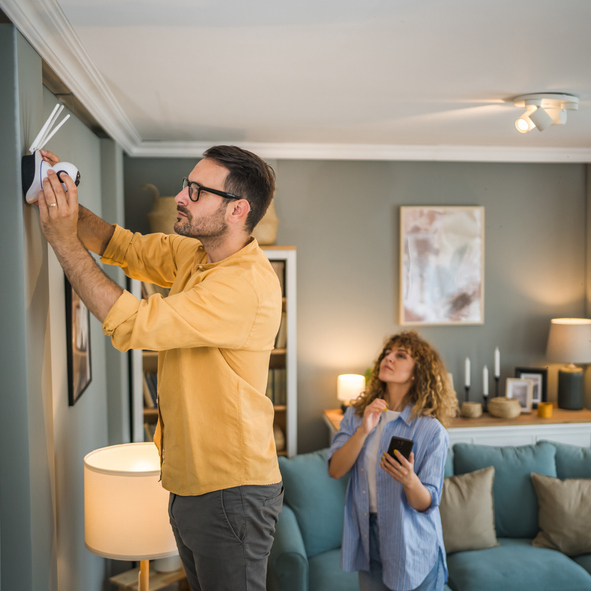
Exterior home security cameras have been around for years, but smart cameras have joined the scene recently, becoming more popular inside homes as well as outside.
Whether during private showings or open houses, these cameras can pose challenges for prospective homebuyers and their Realtors®. How do these recording devices affect home visits? And what are the legal implications?
Buyers Must Hide Emotions
“The biggest challenge is always reminding buyers to hide their emotions, both physical and verbal, as much as possible,” notes Todd Van Horn, a member of the Realtors® Association of Metropolitan Pittsburgh. “As Realtors®, we have to prepare the buyer to assume that they are being video-recorded at all times, and possibly audio-recorded.”
“You don’t want your buyer to criticize the seller’s taste in colors, choice of furniture, lack of updates or lack of cleanliness, because the owner could be offended, which leads them to become defensive and possibly even hostile during contract negotiations.”
Price Conversations Saved for Later
“Buyers often want to talk about pricing as we are touring,” adds Carolyn Corr, a member of Tri-County Suburban Realtors®. “Even though I’ll warn them we shouldn’t discuss this before entering, their emotions and excitement get the best of them, and they will say how much they are willing to pay. It can hurt them in negotiations.”
“Back in the day, agents used to have open discussions about anything while building rapport,” Van Horn adds. “We could discuss things like price, condition and buyer motivation during the showing while walking around the house.”
“Now,” he continues, “you’re often constantly on camera from the time you step out of your car, while walking up to the front door, through the house and back out. Those conversations must now occur in cars, at the office or over the phone, away from the house, to preserve our buyer’s negotiation power. Welcome to 2026 and beyond!”
Legal Factors
Home cameras can feel reassuring to homesellers and invasive to prospective homebuyers, but what should Realtors® and their clients know about the legal factors?
“The Pennsylvania wiretap law makes it a crime to electronically ‘intercept’ (listen to and/or record) the audio portion of a conversation and to use or attempt to use the information that was collected,” PAR Chief Legal Officer Hank Lerner shares. “But this limitation does not apply where all parties to the conversation have given their consent, or when conversations occur in locations where there is no expectation of privacy from the parties.”
There are two approaches to protect sellers from this potential legal problem.
“First, if your seller has devices that can listen to or record audio, the safest legal approach is to ask them to turn off those devices – or at least the audio function – when buyers and others are on the property,” Lerner notes. “But many sellers may be uncomfortable with that, or they may just sometimes forget. The next best option for listing agents is to disclose the presence of the devices, and the fact that they might capture conversations, in as many places and as many times as they possibly can.”
“This could include notes or comments in the MLS (some MLSs may even have a specific field for this), disclosure in phone, text and/or email conversations with buyer agents, and even notes near the front door, since you can’t forget about doorbell cameras.”
“Both the PAR Listing Contract and Buyer Agency Contract have paragraphs informing clients of some of these issues, so be sure to cover those with every client before scheduling any showings,” he adds.
Topics
Member Discussion
Daily Emails
You’ll be the first to know about real estate trends and various legal happenings. Stay up-to-date by subscribing to JustListed.
