
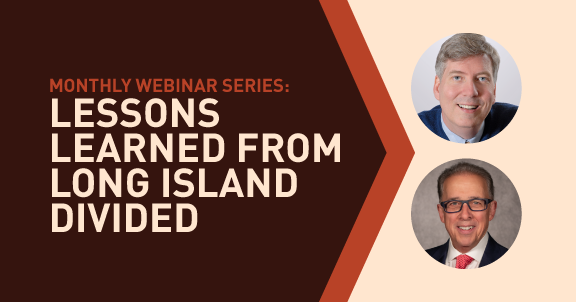
After a shocking undercover investigation of Realtors® revealed widespread fair housing discrimination in Long Island, New York, in 2019, Realtors® nationwide were forced to look inward and ask themselves what fair housing really meant. In yesterday’s PAR webinar, Bill Dedman, one of the Newsday investigative reporters, shared insights about the investigation and the changes that it brought to the industry.
A journalist since age 16, Dedman is a Pulitzer and Peabody award-winning investigative reporter who has written for The Washington Post, The New York Times and The Boston Globe.
Effects of the Investigation
Dedman shared that the National Association of Realtors® has embraced the idea of self-testing agents and committing to change.
“This year, as you’ve heard, NAR has added a minimum training requirement on fair housing for all its members,” he shared. “A bare minimum – just two hours every three years – but that’s more than most state laws require now. And NAR has added Fairhaven, a training simulation, or a video game if you like, that teaches not only the law but encourages empathy for people blocked by fair housing issues.”
Additionally, post-Long Island Divided, New York enacted state laws requiring policies on screening and prequalifying buyers be applied equally to all customers.
However, despite these advancements in fair housing enforcement, Dedman noted that recently, references to fair housing have been scrubbed from the U.S. Department of Housing and Urban Development websites, and fair housing groups funded by HUD have had their grants cut. Despite these setbacks, Dedman reminded viewers that fair housing is still a priority.
“None of this changes the fact that the Fair Housing Act is still law, approved by Congress, signed by the president, upheld by federal courts for 57 years,” he said.
Why It Matters
Dedman reminisced on his family’s properties and the generational wealth they’ve provided, which have helped him see the important role housing plays.
“Each family’s equity in those properties was rolled over into new properties as the generations passed,” he said of relatives. “That equity helped pay for college for their children and grandchildren. It allowed teenagers to have cars and free time so they could have jobs and internships. It provided the first investment in a new business.”
“We usually think of housing in terms of the ceiling, hoping to get rich,” he added. “I think of it in terms of the floor. A cushion against being wiped out when life presents us with troubles… The things that happen to families. That home equity keeps the next generation from having to start over. That’s what we mean by generational wealth.”
“That’s why the work that you do is so important to everyone. That’s why you have your own federal law, one that dry cleaners and pizza places don’t have. You’re not selling homes. You’re selling the main tool we have for families to add wealth.”
Long Island Findings
Reflecting on the Long Island Divided investigation, Dedman shared the findings and what they revealed about housing discrimination at the time.
“Our team followed the methods used by fair housing agencies, sending out testers posing as homebuyers with the addition of hidden cameras to record video and audio,” he said.
A total of 25 undercover testers were trained, and 93 real estate agents were tested during the investigation. Additionally, 5,763 home listings were analyzed.
“Asian American buyers were treated differently than their White counterparts in significant ways that appeared to break the law 19% of the time,” Dedman relayed. “Two out of 10, on average.”
“Latino American buyers were treated differently than Whites 39% of the time. Four out of 10, on average. And Black buyers were treated differently than Whites 49% of the time – 5 out of 10 on average.”
“It was a small test, not even 100 tests, and there are thousands of agents,” he said. “We’re not saying that these results predict what percentage would fail a test if everyone were tested. But our goal was to do a demonstration. Is steering still a thing? It definitely is. And if you make the test as fair as possible and show all of your work, is it hard to find steering? It is not.”
Fair Housing Best Practices
Dedman shared a list of 13 best practices for committing to fair housing. Some of these included:
- Every customer should receive the same behavior from you.
- Use checklists to make sure everyone in your office provides the same information to all customers.
- Work out standard answers or scripts for your brokerage on difficult questions, such as, “Which schools are good?”
- Use templates or draft emails and texts for communication with customers to ensure that you provide them with all the same information.
- Talk about the property, not about the people.
See the rest of the list here (slide 45).
Having Conversations
To conclude, Dedman encouraged all Realtors® to share the Long Island Divided investigation and watch the 40-minute film, Testing the Divide. All information can be found at newsday.com/divided.
“Have this conversation: Our goal is to treat everyone fairly, of course. Now how does that work in our office? Are we qualifying everyone in the same way? Are we giving everyone all the listings that fit what they have asked for?” he said.
Learn more about Long Island Divided and fair housing best practices by viewing this webinar recording.
Topics
Member Discussion
Daily Emails
You’ll be the first to know about real estate trends and various legal happenings. Stay up-to-date by subscribing to JustListed.
