

By Andrea Hernandez, PAR intern 2025
Between contracts, clients and closings, it’s easy to get caught up in the pace of daily business. One of the most valuable things you can offer your clients is transparency. In this article, we will unpack the essentials of some of the misunderstood client relationships and why they matter.
What is an agency relationship?
An agency relationship forms when a brokerage or licensee becomes a fiduciary, someone legally and ethically bound to act in a client’s best interests. As a fiduciary, your duties include loyalty, confidentiality (except when disclosing known material defects), clear disclosure of who you represent and a good faith effort to achieve your client’s goals. Think of it as a professional promise to guide and represent your client efficiently from start to finish in their transaction.
Designated Agency Relationship
In designated agency, the brokerage assigns a specific licensee or licensees to represent the client. Along with the broker, who has a relationship with every client of the brokerage, the designated agent(s) are the only agents who are authorized to work on behalf of the client, serving as their advocate, handling their file, protecting their information and acting solely in their best interest. By the terms of the commission regulations, no other licensee in the brokerage has an agency relationship with those clients, so they should not have access to any confidential client information.
Confirm with your broker if your brokerage practices designated agency, and if so, how they choose to handle the designation process. Remember that since the point of designated agency is that only the agent(s) who are designated for a client are representing them as fiduciaries, all agents with access to a client file should be designated (in writing) in the relevant representation agreement and related transactional forms. Naming all agents clarifies who is authorized to act on behalf of the client and help prevent any potential conflicts or misunderstandings during the transaction.
Dual Agency Relationship
Dual agency is when the brokerage – and sometimes an individual agent – represents both parties (buyer/seller, landlord/tenant, etc.) in the same transaction.
There are two ways dual agency can occur. The first type of dual agency is when both parties are represented by two different agents from the same brokerage. This creates dual agency for the broker, meaning the brokerage represents both parties in the transaction. If the broker does not practice designated agency, this technically creates a dual agency relationship for the agents as well. The second scenario is when the same licensee directly represents both parties in the transaction. In this scenario, the broker is still a dual agent, but so is the licensee. This means the individual licensee has a fiduciary duty to both the buyer and seller.
Because of this shared representation, the responsibilities and ethical considerations are tricky to distinguish and must be managed carefully to ensure appropriate service to both sides. Clear brokerage policies should be set up and enforced to ensure protections are in place and fully explained to clients. Boundaries are critical. You cannot favor one side over the other or take any action that harms either party’s interests. Transparency, balance and meticulous documentation are key to maintaining trust and compliance.
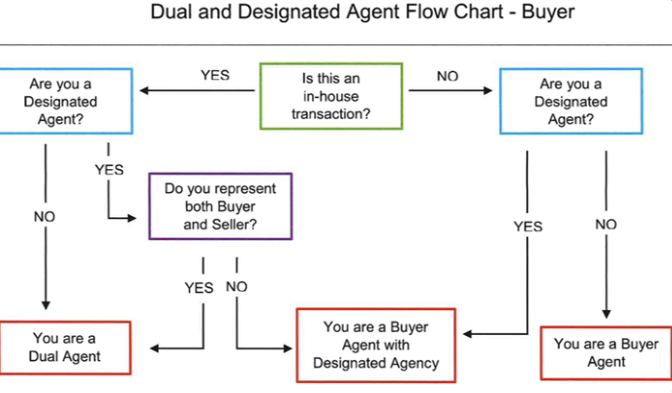
PAR publishes many helpful forms resources, including Guidelines for Preparation and Use for every form. This flowchart, taken from the Agreement of Sale guidelines, may help you understand dual and designated agency.
Below is a refresher to help you distinguish between a dual and designated agent:
Transactional Licensee
This is NOT an agency relationship, as a transaction licensee provides services to one or both parties without representing either.
You must clearly inform the party(s) you are working with that you are not acting as their agent. Consumers should be made aware that they should not share confidential information with you. You owe limited confidentiality, meaning you may not disclose:
- That a seller would accept less than the asking price.
- That a buyer would pay more than their written offer.
- That either party would agree to different terms.
Within this relationship, a transactional licensee provides specific services such as preparing paperwork, coordinating showings or relaying information, but you owe no fiduciary duties to either party.
Because of the nature of the relationship, you cannot be a full-on agent for one party and then be a transaction licensee for another. For example, you cannot be a listing agent (and therefore a fiduciary) for the seller and then be a transaction licensee for a buyer.
PAR offers a Transaction Licensee Contract (Form TLC) that establishes parties’ responsibilities within the relationship, or you can check with your broker to see if they have a similar contract, and they will ask you to use a brokerage policy.
To summarize, being able to clearly explain your role as a dual agent, designated agent or transactional licensee is not just a legal requirement; it’s a professional commitment to integrity and trust. Whether you’re representing a buyer or a seller, or facilitating the transaction, clarity helps set expectations and build confidence in your working relationships.
Topics
Member Discussion
Daily Emails
You’ll be the first to know about real estate trends and various legal happenings. Stay up-to-date by subscribing to JustListed.
