
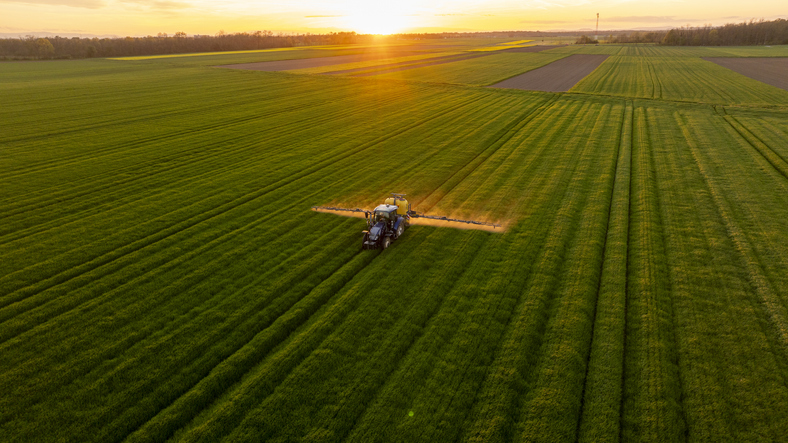
Nearly half of all U.S. farmland is expected to change hands in the next 20 years, according to AgAmerica. Still, only 1 in 4 farmers has a formal succession plan in place. As a result, much of the nation’s farmland is at risk of being absorbed by outside investors rather than passed down to the next generation of farmers.
In 2025, farmland values hit an average of $4,350 per acre. In a state where farming and agriculture are abundant, what does the future of farmland look like in Pennsylvania?
How often are farms sold?
“I work with farm properties regularly, though much of my experience is with smaller farmettes rather than large-scale farming operations,” Tim Keller, a member of the Lancaster County Association of Realtors®, shares. “In our region, it is very common for farm properties, both full farms and smaller acreage parcels, to be sold at auction, especially when they are part of an estate or generational transition.”
“That approach creates a transparent and competitive environment, which tends to bring out serious buyers, whether they are local farmers, neighbors or individuals looking for a rural lifestyle property.”
Greg Herb, a member of Tri-County Suburban Realtors®, notes that he works with farmland properties in Montgomery, Berks, Chester and parts of Lehigh counties. He does not see a big turnover of these properties, as they have typically been held for decades and passed down to the next generation, contributing to a lack of inventory. Many times, they are only listed if the property owner is retiring and doesn’t have a succession plan.
What does the current market look like?
“The market for farm properties continues to be strong, but it is also very nuanced,” Keller says. “Well-located, high-quality farmland, especially with good soils and strong tillable acreage, still commands significant interest and competitive pricing. At the same time, we are seeing a wider mix of buyers than ever before, including neighboring farmers, investors and, in some cases, lifestyle buyers.”
“Interest rates and commodity prices do play a role, but in our area, the long-term value of land tends to keep demand steady,” he adds. “When marketed properly, especially in a competitive environment like an auction, we often see very strong participation.”
“In our market, there’s a lack of inventory and less turnover of farm properties,” Herb reiterates.
The Future of Farmland in Pennsylvania
As more data centers, warehouses and other development projects pop up in rural areas across the country, the threat to farmland increases. What does the future of farmland look like in Pennsylvania?
“One of the encouraging things we see is that a large percentage of farmland ends up staying in agricultural use,” Keller says. “Many times, it is purchased by neighboring farmers or families who have a vested interest in continuing to work the land. Even when it is an investment buyer, the land is typically leased back to a local farmer, so it remains productive.”
He notes that while there are certainly transactions that result in other uses, in his experience in Lancaster County, there remains a strong commitment to preserving farmland and keeping it active for future generations.
“In a place like Lancaster County, farmland is more than just real estate,” Keller adds. “It is a part of our heritage and our future. What we consistently see is that when these properties are brought to market in a transparent and competitive way, they often find their way into the hands of people who truly value and care for the land. That is something our community takes seriously, and it continues to shape how these properties are bought and sold.”
Farmland Preservation Options
Herb shares that for farmers who don’t have a plan to pass their land down, there are preservation options.
In these cases, developers may try to buy the land, which is worth significantly more than if the farmer were to sell the property as a farm. In Pennsylvania, there are some programs that allow farmers to sell their property for preservation instead, and the program will pay the difference between the price they would’ve gotten from developers and the price they would’ve gotten as a farm. These programs vary by municipality and township.
“These programs have helped preserve a lot of farms in our area,” Herb explains, especially in cases where farmland succession is not the plan because it is not financially feasible.
Herb also notes that farmers can sometimes receive tax reductions when they agree for their property to stay as farms or preserved land, especially under the Clean and Green Act 319.
He shares some additional preservation resources for farmland properties:
Topics
Member Discussion
Daily Emails
You’ll be the first to know about real estate trends and various legal happenings. Stay up-to-date by subscribing to JustListed.
