
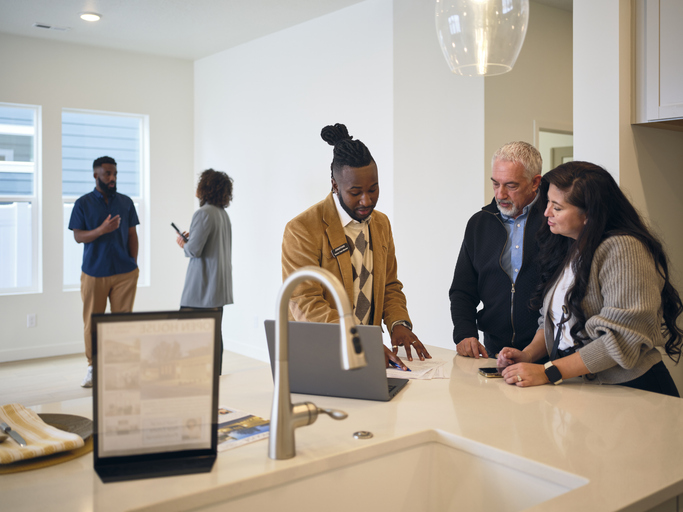
The days are longer, birds are chirping and daffodils are blooming. And there’s another sure sign that spring has arrived – open house signs are popping up on every other street corner. Review these legal hotline FAQs about seller representation at an open house as you prepare yourself for open house season, and stay tuned for a follow-up FAQ focused on buyer issues.
Do buyers have to sign a written agreement to walk through an open house?
The general answer is no – you don’t need a buyer agreement just to allow buyers to walk through the open house. MLS rules require a written agreement to be signed with a buyer prior to touring a home when you are “working with” a buyer, but NAR has explained that there is a difference between “working with” a buyer and merely marketing your services or just talking to a buyer at an open house. Opening the door and letting them walk through does not trigger the written agreement.
That said, the details of what you do and say could change that answer. If you are actively trying to sign them up as a buyer client, or if they ask you to help them write an offer if they like the property, at some point those conversations may cross the line to “working with” that buyer. Brokers should talk to agents about where that line might get crossed, and how to handle the situation if it arises.
Do I need any sort of agency disclosure at the open house?
Some states require specific agency disclosure signs at an open house; Pennsylvania does not. Of course if your broker has certain signage requirements, you should follow them.
But remember that Pennsylvania law does require that a Consumer Notice be presented to a consumer at the time of the “first substantive discussion between a licensee and a consumer about the consumer’s real estate needs.” If a buyer attends your open house and there’s a discussion about things like their wish list and the amount of their mortgage pre-approval, you probably should be giving them a Consumer Notice at that time, since they’re telling you things that you might end up using against them.
Can an unlicensed assistant cover my open house?
No. Past guidance from the State Real Estate Commission indicates that they consider consumer-facing open houses to be a licensed activity, so a person without a license can’t host an open house.
Can another agent at my brokerage cover my open house?
Would this article be complete without an “it depends”?
If your brokerage does not practice designated agency, then by law, every agent in the brokerage is deemed to represent every client of the brokerage. As far as the law is concerned, this means that any agent at the brokerage could potentially work on behalf of any client, which could include hosting an open house. Of course, check with your broker about whether they have any internal policies that you’d need to follow.
But if your brokerage does practice designated agency, this means that the broker appoints one or more agents to represent a particular client to the exclusion of all other agents in the office. This means that only the broker and those agents designated for the seller represent the seller; every other agent in the office has no agency relationship with the seller. That being the case, the best practice would be to have that other agent designated on behalf of the seller, at least for this limited time period and purpose. Check with your broker to see exactly how they want to handle it, but designated agents for a seller are easily added and removed with the Change to Listing Contract (PAR Form CLC).
Can an agent from a different brokerage cover my open house?
The most likely answer to this one is “no.” Remember that an open house is a licensed activity. Just substitute any other licensed activity into that question and see how it feels. (E.g., “Can I ask an agent from a different brokerage to negotiate the contract for my client if I’m not available?”)
When a seller signs a listing contract with you and your brokerage, it creates a fiduciary relationship between the brokerage/agent and the client. Asking some other agent at some other brokerage that has no agency relationship with the seller to cover some of your licensed responsibilities is problematic. For example, this agent would not actually be there to look out for your seller’s best interests if they have no contractual responsibility to the seller. In fact they might be obligated to work against your seller’s interests if they sign a buyer agency agreement to represent one of the buyers who sees the house. We strongly encourage brokers to discuss this potential scenario with brokerage counsel to determine if it may be helpful or necessary to create a brokerage policy on this issue.
(Note that there could be acceptable scenarios in which two brokerages co-list a property or share client responsibilities in some other contractual relationship. Any of those relationships should be reviewed by the broker and/or brokerage counsel.)
Let’s assume there’s someone who could cover my open house for me. Can I pay them?
Not directly, no. Again, an open house is considered to be licensed activity. Licensees can only receive payment for licensed activity from their own broker. If Agent X in your office agrees to host the open house on your behalf, you could agree that she would get some compensation for doing so, but that compensation would have to come through the broker. For example, you might agree that a certain amount would be deducted from one of your transaction commissions and paid to Agent X by the broker (or whatever other arrangements your broker might permit), but you couldn’t just peel off some crisp $20s as a thank-you.
Topics
Member Discussion
Daily Emails
You’ll be the first to know about real estate trends and various legal happenings. Stay up-to-date by subscribing to JustListed.
