
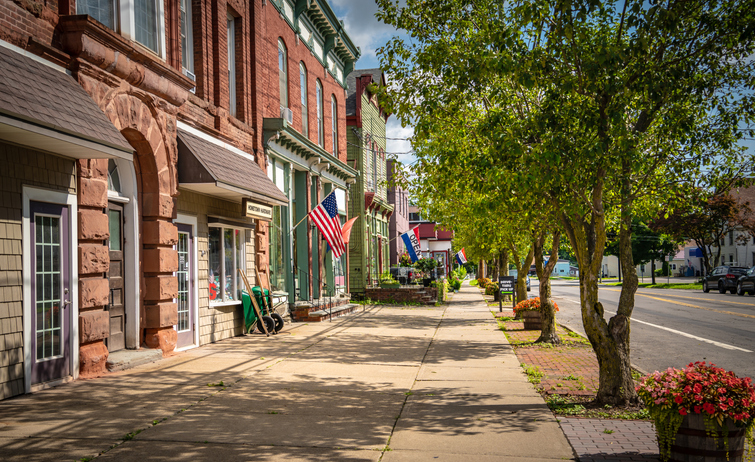
Pennsylvania real estate professionals spoke on a panel about adaptive reuse’s dynamic and transformative power as a catalyst for revitalization and economic development in Pennsylvania’s Main Street communities last week in Harrisburg at PAR’s Fall Business Meetings.
Panelists included: Ryan Emerson from the Pennsylvania Department of Community and Economic Development; Realtor®, broker, builder and investor Stephen Fleming; and President and CEO of Harristown Enterprises Bradley Jones. Mike Rohm, managing director of Commonwealth Commercial Appraisal Group, served as the moderator.
When Rohm asked about the challenges of adaptive reuse projects, all three panelists agreed that economic drivers play a role, with construction costs, interest rates and inflation being among them. Fleming added that finding tenants to live in mixed-use spaces and run businesses also poses a challenge, as well as ensuring the project is sustainable long term.
Jones noted that office buildings offer a significant opportunity for adaptive reuse, and he has worked on numerous projects and continues to do so. He shared that he has about 250-300 residential units in the development pipeline for downtown/midtown Harrisburg offices. However, he added that one challenge that sometimes arises when reusing office buildings is that the floor plate isn’t always ideal in size for turning into residential units. Larger floor plates can pose a challenge with their limited natural lighting, requiring more in-depth layout planning.
Considering the financial challenges these projects can face, all three panelists agreed that finding funding is key. Emerson mentioned various funding opportunities to help combat economic obstacles, including the Main Street Matters Program, Pennsylvania Mixed Use Housing Development Program and Pennsylvania Strategic Investments to Enhance Sites Program. He also added that partnerships with local economic development organizations helps, as does having a vision for the larger community (not just downtown).
“These projects are very much an ‘it takes a village’ situation,” Fleming said, emphasizing the importance of leveraging different grant programs. He noted that for one project he worked on, 50% of the cost was funded by public funds, which was good for both costs and confidence.
“The community is just as much a player as the developer, and even more so once a project is done,” Fleming added. He explained that the community has to support the project, and the project needs the community to support it.
However, communities aren’t always immediately on board for adaptive reuse projects. For those who may need more convincing, Fleming emphasized the importance of engaging community members every step of the way, including explaining the master plan and expressing the vision from the start.
Jones agreed and recommended asking the community for opinions along the way, as well as making a habit of being transparent about the plan every step of the way. Emerson added that letting the community know the project is working with local partners is another way to help gain public favor.
Topics
Member Discussion
Daily Emails
You’ll be the first to know about real estate trends and various legal happenings. Stay up-to-date by subscribing to JustListed.
