
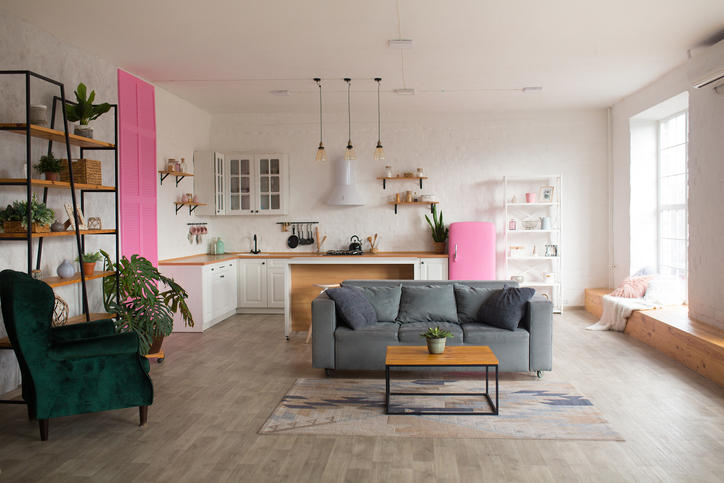
Open-concept floor plans have been popular since the mid-20th century. In 2017, a survey by the National Association of Home Builders showed that 32% of buyers wanted a home with a completely open kitchen-family room arrangement, and 45% wanted a completely open kitchen-dining area.
But an open-concept layout isn’t for everyone, and today, more people are looking for homes with traditional floor plans and cozier rooms. They’re even questioning the effects an open home has on their mental health.
Ultimately, the choice comes down to individual preferences and lifestyles. However, if you or your client are questioning whether an open-concept home is right for you, there are some pros and cons you can consider to help decide.
Pro: Illusion of more space
An open layout can help make a small space feel larger by increasing visibility and allowing more natural light to come in. This can be helpful in smaller homes.
Con: Overwhelming space
With larger homes especially, an open layout can feel too big. A lack of walls can create echoes, minimize cozy feelings, feel less welcoming and give warehouse-like vibes.
Pro: Free-flowing conversation and socialization
Open-concept floor plans allow for easier conversation, which can be especially ideal for hosting guests who want to socialize, snack and relax at the same time. They also allow families and household members to openly spend time together without being closed off.
Con: Limited privacy and sanctuary
If frequent socialization isn’t your thing, an open layout may feel noisy, cramped and chaotic – especially if you’re trying to read a book while someone else is shouting at the television. This may limit quiet spaces to bedrooms and bathrooms only.
Pro: Elimination of underused spaces
Sometimes homes have rooms that don’t get used very much, like formal living rooms, guest rooms, awkward hallways, entryways, formal dining rooms and more. An open floor plan often eliminates these rooms, maximizing usable space within the home.
Con: Higher heating/cooling costs
One large space is typically more difficult and more expensive to regulate in temperature than multiple small spaces, resulting in higher electricity bills. A large, open room may also require additional insulation and/or upgraded windows.
Pro: Easier cleaning
With fewer corners and smaller spaces, cleaning an open-concept floor plan can be easier and quicker. Nooks and crannies aren’t as abundant, and larger spaces can be more straightforward to keep tidy. It’s also easier to keep all of your cleaning supplies in one area instead of carrying them from room to room.
Con: No hiding messes
That said, it’s harder to hide messes when you have fewer walls. Having guests over might require more cleaning than it would with a traditional floor plan, and in general, keeping the area looking tidy can be more difficult when everything is out in the open. Additionally, an open-concept kitchen will allow food smells, smoke and oven heat to travel to other living spaces (and potentially stick to your furniture).
Topics
Member Discussion
Daily Emails
You’ll be the first to know about real estate trends and various legal happenings. Stay up-to-date by subscribing to JustListed.
