
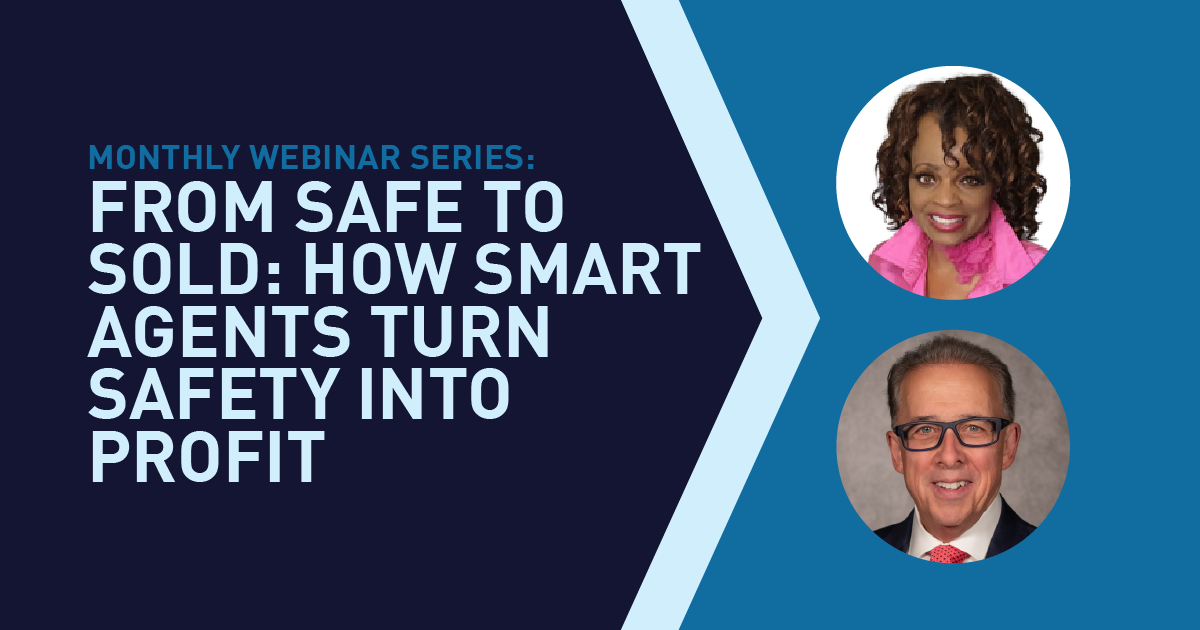
September is Realtor® Safety Month, and last year, 27% of residential Realtors® reported not having personal safety protocols to follow with every client, according to the National Association of Realtors®. Yesterday during PAR’s monthly webinar, Tracey “The Safety Lady” Hawkins shared smart tips for agents to turn safety into profit.
Hawkins, a former real estate agent herself, is the founder of Safety and Security Source and often speaks nationally about Realtor® safety.
“The U.S. Department of Labor considers real estate sales and leasing a high-risk, hazardous occupation,” she said, highlighting the dangerous nature of regularly meeting strangers in empty houses. “And that’s just based on the job description.”
Safe Open Houses
“Thirty-four percent of Realtors® reported feeling unsafe during an open house,” Hawkins cited from a recent NAR report. She shared her best tips for working with sellers during open houses:
- Instruct sellers to remove or lock away valuables, cash, jewelry, firearms and prescription drugs before the open house begins.
- Require all visitors to sign in and show valid identification.
- Set up security cameras, smart doorbells or motion sensors to monitor activity and deter suspicious behavior.
- Consider posting “Smile, you’re on camera!” signs.
- Keep your phone charged and accessible.
- Share your schedule with a colleague or office and use a safety app with location sharing enabled.
- Establish a clear safety plan with multiple exit routes.
“I think probably the most important part of the selling process is when you talk to sellers and say, ‘I am here looking out for you, and I want to make sure your property, your family and your possessions are safe while your house is on the market and people are walking through,” she said, emphasizing the importance of ensuring sellers’ safety and your reputation as a trustworthy professional.
Highlighting Your Value as a Safe Realtor®
Establishing a reputation as a Realtor® who prioritizes safety adds business value. Hawkins suggested showing that value by meeting with potential clients in advance and framing the meeting as a buyer/seller safety consultation.
For example, when working with buyers, she recommended saying something along the lines of, “‘We’re going to sit down and talk about how to prevent you from being victimized during the real estate process. And, by the way, here’s this buyer agreement, which is going to talk about how we will do business together.”
This helps ensure buyers that you’re prioritizing their safety while also allowing them to sign a buyer agreement at the same time, if they choose to do so. Additionally, meeting in advance helps ensure your safety as a Realtor® and allows you to get a feel of the client in a safe space.
Safety for FSBOs
How can Realtors® use their safety skills to convert those selling their own homes into clients? Hawkins shared a handout of FSBO safety tips that she recommended distributing to highlight the risks of selling without an experienced Realtor®.
“Be the agent who looks out for the FSBO and educates them about the dangers,” she said. “This is truly a good service, but the upside is it’s going to make you look better in that seller’s eyes, because they had no idea of the risks.”
Remembering the Importance of Cyber Safety
As artificial intelligence gets smarter, cybercriminals get better at committing crimes. When talking about safety in the real estate process, it’s important to remember cyber safety.
“My biggest concern about AI is that people are not paying attention,” Hawkins said. “I have two groups of people that I talk to. One is those who say, ‘Nope, not touching it, not going anywhere near it. I am not participating.’ So, what I say to them is that you need to participate, because cybercriminals are.”
“Then, I have the group of people who say, ‘I love it. I use it every day. I’m using it to write listing descriptions. I’m using it to do my social media posts. I’m using it for everything.”
“To both groups, I have to say, ‘Stop,’” she said, encouraging Realtors® to think about their own cyber safety before continuing. “Who’s talking to you about safety?” she asked. “Who’s talking to you about how to use the tools in a safe way? And who’s talking to you about how cybercriminals are using the tools targeting the industry? And the answer is often no one.”
Using a Code Word
How do you avoid cybercriminals in real estate?
“The solution is a code word,” Hawkins explained. “If someone’s calling asking for money or financial information, you must have a code word in your business, in your brokerage, in your association or on your team. If someone’s asking for something and it’s not normal or it doesn’t feel right, what’s the code word? If they don’t know the code word, click! You’re hanging up and you’re calling back on a number that’s known to you.”
She also recommended that Realtors® provide their clients with a list of correct contact information for them, lenders, title companies and anyone else they may work with during the process at the beginning. That way, the client can confirm that the person calling is the correct person, and they have the ability to hang up and call back if they suspect something’s wrong.
For More Safety…
To learn more about safety from Hawkins, including popular real estate cybercrimes like pig butchering, AI-generated voice calls and deepfakes, view the webinar recording and related resources on PAR’s site.
Topics
Member Discussion
Daily Emails
You’ll be the first to know about real estate trends and various legal happenings. Stay up-to-date by subscribing to JustListed.
