

Appraisal modernization changes are currently being implemented and will be mandated by Nov. 2, 2026. Michelle Czekalski Bradley, a real estate broker, certified general appraiser and USPAP instructor with 40 years of experience, provided an update on what Realtors® need to know about the Uniform Appraisal Dataset (UAD 3.6) and what the Federal Housing Finance Agency requires of appraisers for residential properties.
Appraisal Changes Shift Reporting Structure
“These changes are more than simply a new form,” Czekalski Bradley told PAR President David Dean during a PAR webinar on March 24. “This represents a shift from narrative-based reporting to structured data collection where appraisers will use more check boxes and drop-down menus so Fannie Mae and Freddie Mac can have their computers ‘read’ the data more easily.”
These changes are being redesigned to fit a data-driven lending environment where information can be analyzed and interpreted by systems, not just people, according to Czekalski Bradley. “It takes the appraisal report and transforms it into something that can be ready to use across multiple platforms, not just by one mortgage underwriter,” she said.
Transition Is Occurring and Being Implemented
The transition is in active rollout; several new appraisal software platforms have been released, and more are expected.
“In the next seven months, appraisers and lenders will have to transition to fully using the new system,” she said. “During this learning curve, appraisers will be spending more time on inspections, collecting more data points. That can influence timelines and expectations in transactions.”
She said it’s important to understand that the changes are not affecting the methodology of how an appraiser develops an opinion of value. The communication and reporting of the appraiser’s analysis is changing. The new reporting requires appraisers to break down information into more specific, data-driven categories rather than relying on narrative descriptions.
What Realtors® Need to Know
A big change will be the increased use of Property Data Collectors (PDCs), which is being pushed in lieu of having appraisers conduct the property inspection. “This is causing significant concern among many because PDCs aren’t licensed and have only basic training,” she explained.
“Realtors® may notice that appraisers are spending more time at the property, asking more detailed questions and taking more photographs. Appraisers will also be asking for specific information, such as dates of updates and details about improvements made to the house.”
Appraisers will have to capture details like:
- The estimated age of the roof, not just its condition
- The elevation of the front door relative to the ground
- Whether the heating system is located below grade
- Detailed ceiling heights
- Disaster mitigation features, like storm shutters or impact-resistant glass
- Green/energy-efficient features
- The type and quality of the view, and how it may impact the value and marketability
- Broadband internet availability
There is also a major change in how appraisers report defects, damages and deficiencies, requiring them to identify:
- The specific feature and its location (such as missing shingles, for example)
- A description of the issue and whether it affects soundness or structural integrity
- A recommended action to repair, along with supporting photos

“Agents can be extremely helpful by having detailed information ready, including dates of updates, specific information about the modifications made and the materials used,” Czekalski Bradley said.
What if the seller doesn’t know the specific information? “Appraisers must ‘guess,’ because the data points are mandatory,” she said.
Two of the biggest changes are moving away from subjective terms like “updated” or “remodeled” and toward standardized classifications that are defined and consistent across all reports.
“Realtors® can be prepared to explain what exactly was updated in the home, when it was done and how extensive the work was and what materials were used,” she said. “Terms like updated or remodeled will no longer be used in the same way, so agents should prepare their sellers to be able to provide clear details about what was done and when, when possible.”
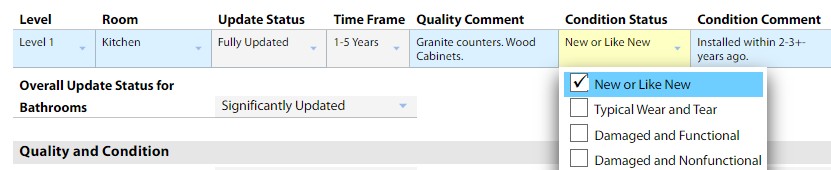
For kitchens, there will be three options for the appraiser to choose: Fully updated, Partially updated, Not updated; along with the timeline: Less than one year; One to five years; Five to 10 years; or 10 or more years (those are the only options).
Every bathroom in a property must be documented separately and must be rated now with four options: Fully updated, Significantly updated, Moderately updated and Not updated. This can also add to the time required to complete the property inspection.
According to PAR Associate Counsel Kacy Clouser, PAR’s Standard Forms Committee is not making any changes at this time but is continuing to monitor the changes to see if forms updates will be appropriate.
Expect Longer Inspection and Reporting Times
Czekalski Bradley warns that during this transition, agents can expect longer inspection times and potentially longer report completion times in the short term.
“Be aware that the changes are happening now,” she added. “We are already in the rollout. Agents can set expectations with their clients about possible delays, provide more information upfront to avoid delays and respond more efficiently when questions come up during the appraisal process.
“Advise sellers to be prepared with details. The more specific information you can provide about the property, the smoother the appraisal process is going to be,” she advised. “And please be patient this year as everyone is adjusting to these changes.”
For more details, watch the webinar recording.
Topics
Member Discussion
Daily Emails
You’ll be the first to know about real estate trends and various legal happenings. Stay up-to-date by subscribing to JustListed.
