
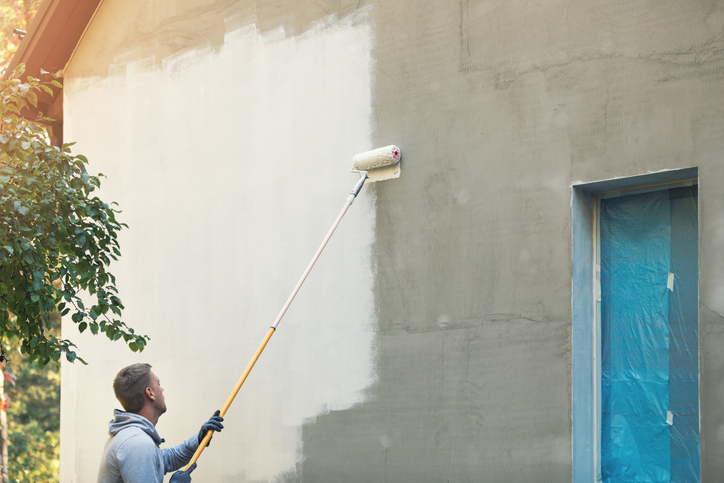
Whether you’re looking to sell or you just want a refresh, a fresh coat of paint on your home’s exterior can make a big difference in its curb appeal and overall appearance. Hiring a professional is a great option, but if you’re looking for a DIY project, here are eight steps from painting and decorating expert Joshua Evans at PriceYourJob.co.uk.
1. Clean Thoroughly
The first step to preparing to paint your home’s exterior is to complete a thorough cleaning.
“A clean surface is essential for optimal paint adhesion,” Evans says. “Begin by removing any loose dirt, grime or mildew with a pressure washer or with a combination of mild detergent and water. A stiff brush can also help to remove loose bits of dirt. Make sure to pay special attention to the areas around windows, doors and trim. If there are any stubborn stains, consider using a stronger cleaning solution that is specifically designed for exterior surfaces.”
2. Repair Damage
“Inspect your home’s exterior for any damage, such as holes, cracks or peeling paint. Repair any damaged areas using appropriate patching materials and fillers. If there is more significant damage, you may need to consult a professional for help with the repairs.”
3. Remove Loose Paint
To ensure your fresh paint adheres properly, scrape away any loose or peeling paint on your home’s exterior first using a paint scraper.
4. Prime the Surface
Now it’s time to think about painting.
“Priming the surface is crucial, especially if you’re painting over bare brick, bare wood or a previously painted surface with a different type of paint,” Evans notes. “Primer helps the paint adhere better and provides a uniform base for the topcoat.”
“Choose a primer that is specifically designed for exterior surfaces and compatible with the type of paint you’ll be using.”
5. Choose the Right Paint
“Selecting the right paint for the job is essential for a durable and attractive finish,” says Evans. He advises considering these factors when choosing:
- Paint type: Choose a high-quality exterior paint that is suitable for your climate and the surface you’re painting. Masonry paint is formulated to withstand the elements and provide long-lasting protection.
- Paint finish: The paint finish you choose will affect the appearance and durability of your home’s exterior. A matte or satin finish is often preferred for brickwork, while a gloss finish is more durable but can highlight surface irregularities.
- Color selection: Aim to choose colors that complement your home’s architecture, style and local surroundings. Consider the impact of natural light as well.
6. Know Your Painting Techniques
“The choice of painting technique will depend on several things, including the size of the surface area, the level of detail and your personal preference,” explains Evans.
One of the most common methods is using a brush and roller. A brush is optimal for smaller areas, intricate details and hard-to-reach spots. A roller is helpful for painting larger, flat surfaces, as it can cover large areas while providing a smooth finish.
Another common method is spray painting, which can be very fast and efficient for larger surface areas. However, this method requires additional preparation and consideration, such as masking off areas that must stay paint-free, choosing a suitable spray gun, practicing spraying for distance and steadiness and properly cleaning up spray equipment.
7. Consider the Weather
“The ideal weather for painting is a mild, dry day with low humidity,” Evans notes. “Try to avoid painting in extreme heat, cold or rainy conditions. Strong winds can cause paint to dry too quickly, leading to uneven coverage and a poor finish. Additionally, painting in direct sunlight can cause the paint to dry too quickly, leading to streaks and uneven coverage.”
8. Remember Safety
Now that you’ve primed, prepared and found the perfect weather conditions, it’s time to get painting. But don’t forget these important safety items:
- Sturdy, chemical-resistant gloves to protect your hands from paint and cleaning chemicals
- Safety goggles to shield your eyes from paint splatters and debris
- A respirator mask that can filter our harmful fumes and particles, especially when spray painting
- Old clothes you don’t mind getting paint on, or a painting suit
- A ladder in good condition with no broken rungs or loose parts
Topics
Member Discussion
Daily Emails
You’ll be the first to know about real estate trends and various legal happenings. Stay up-to-date by subscribing to JustListed.
